

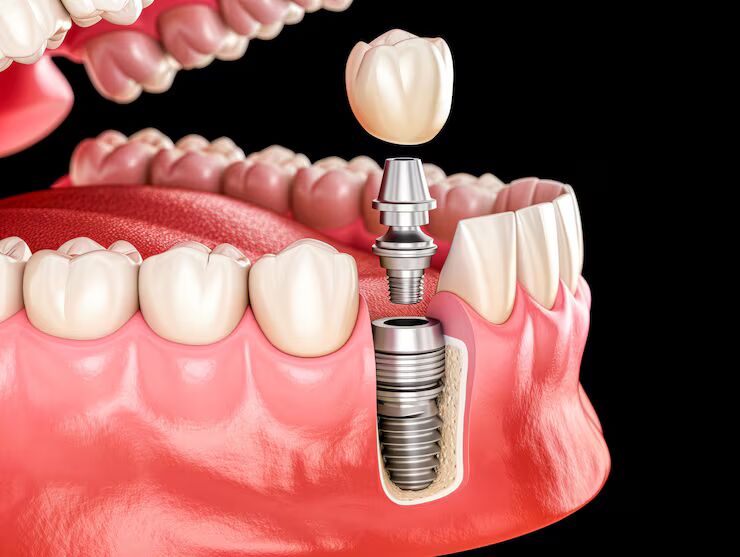
Losing a full arch no longer means a removable denture. A fixed set of teeth can sit on a handful of implants, and the two approaches you will hear about most are All-on-4 and All-on-6. Both replace an entire arch but differ in implant count, the amount of bone required, and how chewing forces are distributed. If you are looking into dental implants in Surrey , knowing how each one works makes it much easier to follow the recommendations you receive.
How All-on-4 Works
All-on-4 carries a full arch on four implants. The two front implants go in straight; the two back implants are tilted. That tilt lets the rear implants grip the denser bone toward the front of the jaw and avoid the sinus or the nerve canal. That is why All-on-4 often skips grafting and can sometimes mean temporary teeth the same day.
How All-on-6 Works
All-on-6 uses six implants rather than four. More posts holding the bridge means less strain on each one when you chew, and that adds up over twenty years of meals. The problem is the back of the jaw. Bone there is often thin, so a graft or sinus lift may have to come first.
How Many Implants for a Full Mouth?
One of the first questions we hear is how many implants a full-mouth case takes. Usually four to six per arch, or eight to twelve when both jaws are done. Beyond that, it depends on your bone structure, arch size, bite strength, and overall health, so we take a 3D scan at our dental clinic in Surrey before recommending either option.
All-on-4 vs All-on-6 Implants: Key Differences
Where All-on-4 vs All-on-6 implants actually differ:
- How many: Four implants per arch, or six
- Bone: All-on-4 manages with less; All-on-6 needs a solid amount at the back
- Chewing load: Six posts take the strain instead of four
- Treatment time: All-on-4 is typically faster if no graft is needed
- Suited to: All-on-6 for wide arches, hard biters, and grinders
Neither wins outright; it comes down to your jaw and your goals.
Full Mouth Dental Implants Recovery
Full-mouth dental implant recovery happens in stages. The first week is the rough one: swelling, soreness, and a need for painkillers and rest. After that, you eat soft foods for a few weeks while bone grows onto the implants. Dentists call this osseointegration, and it takes three to six months. Only then do they place the permanent teeth. Follow-ups at a dental clinic near you catch any problem early.
Take the Next Step
Choosing between All-on-4 and All-on-6 dental implants starts with understanding your dental needs, bone health, and long-term goals. Contact Dentists of Chimney Heights to schedule a consultation. Our team can examine your oral health, explain how both options differ, and help you understand which treatment may be suitable for restoring your smile and chewing function.
FAQ’s
How do you know if you need All-on-4 or All-on-6?
It comes down to the exam and the 3D scan. Strong bone at the back, a wide arch, or a heavy bite favors All-on-6; with less bone, All-on-4 is usually safer.
Is All-on-6 more expensive than All-on-4?
Usually, yes. Two more implants and a longer surgery add to the bill. That said, if All-on-4 needs a bone graft first, the gap narrows.
How long does recovery take for full mouth implants?
The gums settle in one to two weeks; the implants need three to six months to bond with the jawbone before the final teeth go on.
Can All-on-4 implants fail?
Rarely, but yes. Smoking, poor brushing, uncontrolled diabetes, and grinding can all interfere with how the implants bond. Regular check-ups and careful home care are the best protection.